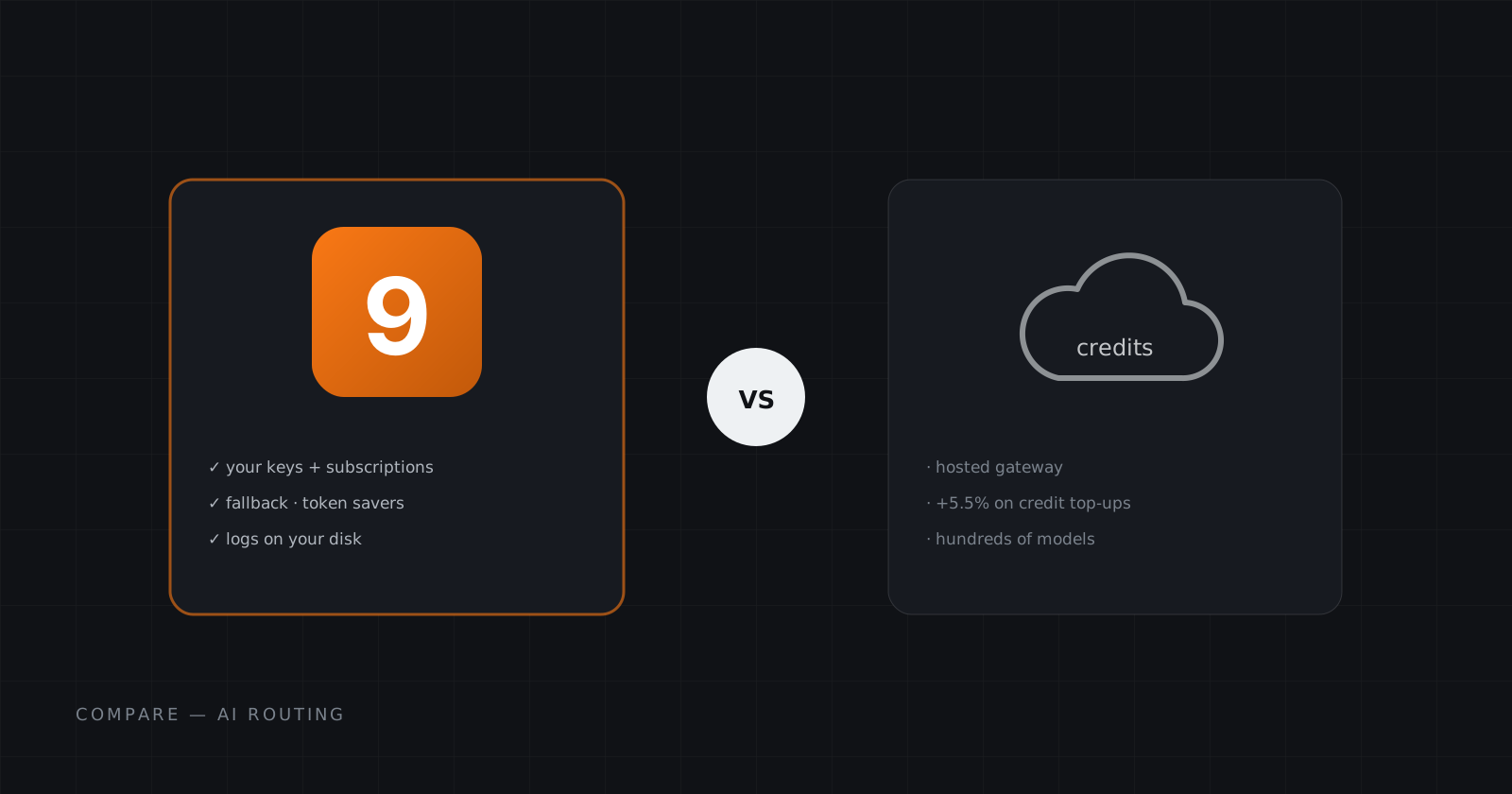
Both put one API in front of many AI models. The difference is where the router runs and whose accounts it uses.
- OpenRouter is a hosted gateway. You buy credits from OpenRouter and call hundreds of models through one key.
- 9Router is a self-hosted router. You run it yourself, plug in your own keys and subscriptions, and it decides which one answers each request.
Short answer: use OpenRouter if you want the widest model catalog with no infrastructure. Use 9Router if you already pay for several providers and want to use that quota first, cut tokens, and keep request logs on your own machine.
How OpenRouter works
You top up credits and call any model on the catalog with one key and one OpenAI-style API.
- No markup on inference. OpenRouter says you pay the provider’s list price per token.
- A fee on credits. Buying credits costs 5.5% by card ($0.80 minimum) or 5% by crypto.
- Bring your own key. Using your own provider keys is free up to $25,000 of usage a month, then 5%.
- Hosted. Nothing to run, and requests pass through OpenRouter’s infrastructure.
How 9Router works
9Router runs on your own server and gives your tools one OpenAI-compatible /v1 endpoint. (What is 9Router? goes deeper.)
- Your accounts first. Tiered fallback tries subscriptions you already pay for, then cheap APIs, then free tiers. When one runs out, the next one answers.
- Token savers. It compresses tool output like
git diffandgrepbefore sending it, which typically saves 20–40% of input tokens. An optional terse-reply mode cuts output tokens. - Quota tracking. A dashboard shows live usage and reset countdowns for each provider.
- Format translation. OpenAI, Claude, Gemini, and other formats in and out, so tools don’t care which provider answered.
- Your logs. Requests, keys, and usage history stay on your own disk.
One caution: check each provider’s terms before routing a personal subscription through a shared endpoint. Some plans are licensed for one person using their own tools.
Side by side
| OpenRouter | 9Router | |
|---|---|---|
| Where it runs | Hosted by OpenRouter | Self-hosted |
| How you pay | Credits (+5.5% card fee) | Your own provider accounts |
| Model catalog | Hundreds of models | Whatever providers you connect |
| Uses subscriptions you already pay for | No | Yes, as the first tier |
| Token compression | No | Yes (tool output, terse replies) |
| Request logs | Their dashboard | Your disk |
| Ops work | None | Keep a service online |
They aren’t mutually exclusive
OpenRouter makes a good provider inside 9Router. Put it in the paid tier behind your subscriptions and your tools get OpenRouter’s catalog as a fallback without changing their endpoint.
Running 9Router without a server
A router only helps if every machine can reach it all the time. On Cadesia, 9Router runs in its own Pod with an HTTPS Address and persistent storage for providers, combos, and usage history. It’s in the App Library. To give an agent or your workflows the same endpoint, see one API key for every AI model.
Questions
Does OpenRouter mark up model prices?
OpenRouter says it passes through provider pricing with no markup on inference. It charges a fee when you buy credits (5.5% by card with a $0.80 minimum, 5% by crypto). Bring-your-own-key usage is free up to $25,000 a month, then 5%.
Can I use 9Router and OpenRouter together?
Yes. OpenRouter can be one of the providers inside 9Router. Your tools keep one endpoint, and 9Router decides when a request should go to OpenRouter or somewhere else.
Is 9Router OpenAI-compatible?
Yes. It exposes an OpenAI-compatible /v1 endpoint and translates between OpenAI, Claude, Gemini, and other formats, so any tool that accepts a custom base URL can use it.